Dimple physics
There are countless web pages explaining why dimples are useful on golf balls. That's why I'll give only the management summary on this site. Key points to remember:
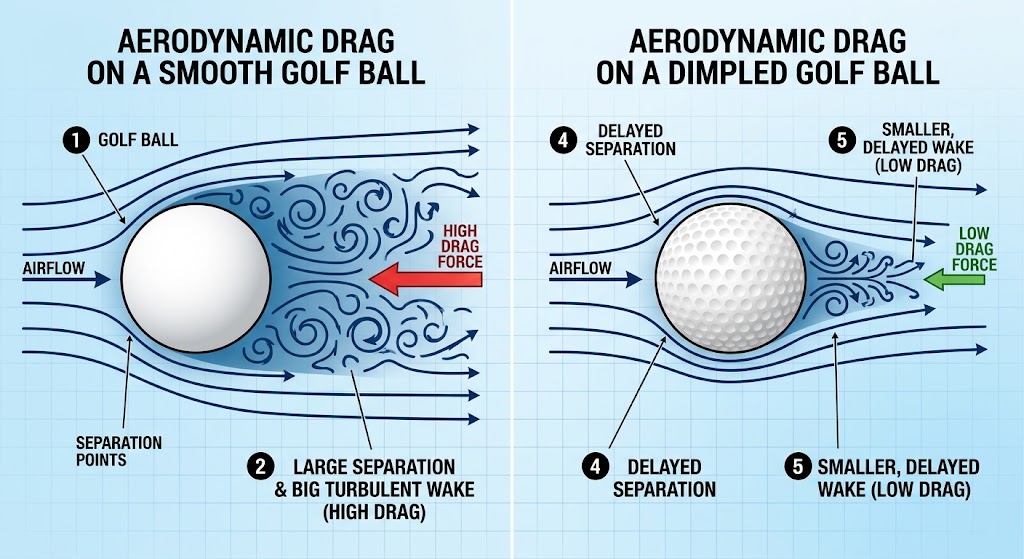
- The aerodynamic drag of a golf ball is mainly caused by the low-pressure wake behind the golf ball
- Dimples create turbulent flow around the ball, strongly reducing the size of the wake (see images below)
- The higher the coverage (the portion of the ball covered by dimples), the lower the drag
- Very small dimples are not as effective as larger dimples
- Deeper dimples lead to a lower flight, shallower dimples lead to a higher flight (for spinning balls)
Symmetry
Designing a golf ball dimple pattern is less time-consuming than one might think. All dimple patterns make heavy use of symmetry. This
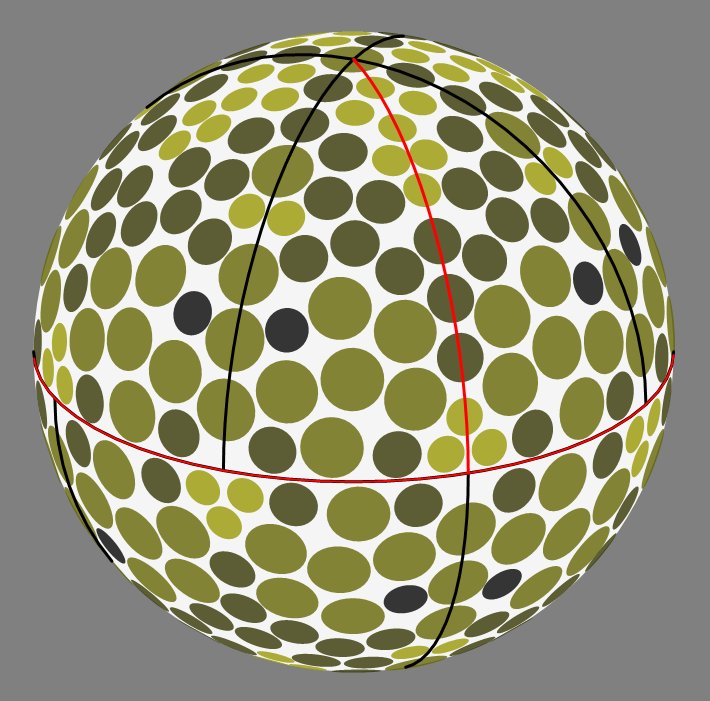
means that only part of the pattern needs to be defined; the rest is a question of smart mirroring and copy-pasting dimples.
Most patterns are composed of two identical hemispheres. Furthermore, the hemispheres are divided into smaller identical parts.
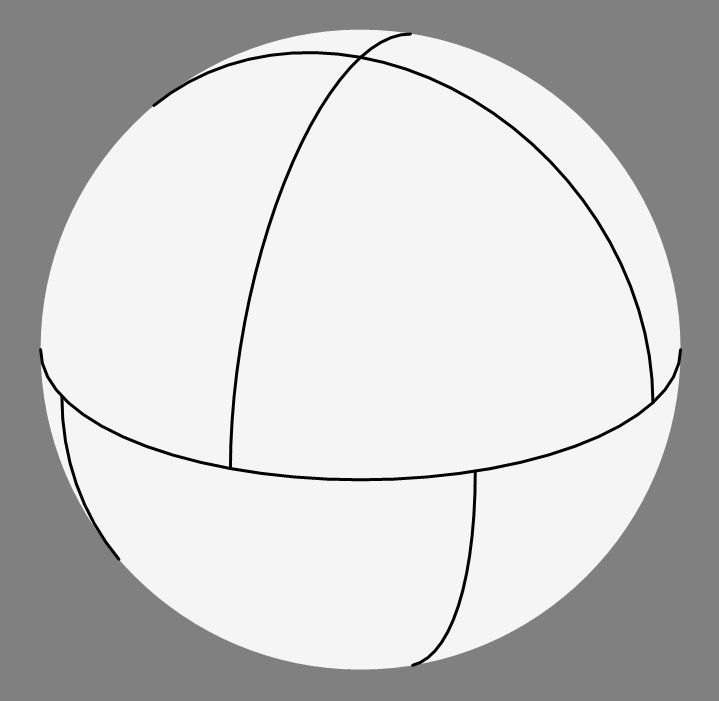
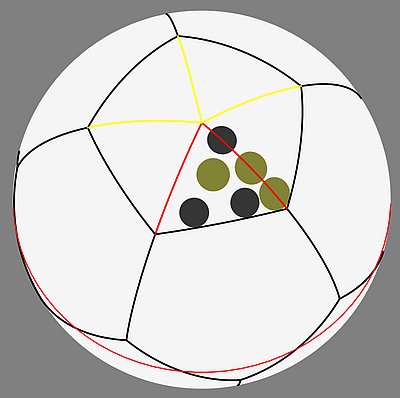
For example, an octahedral pattern (see left image below) divides each hemisphere into four identical
triangular parts. It doesn't stop there: each of those parts is symmetric around its midline.
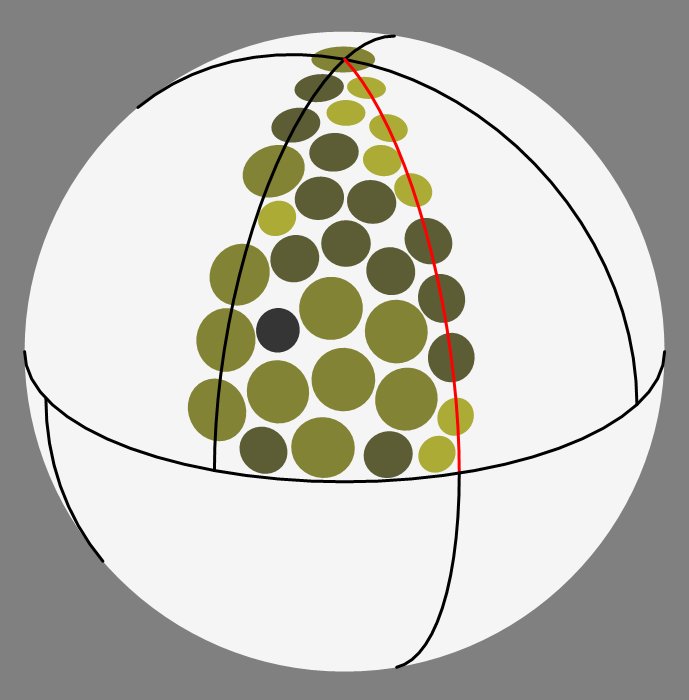
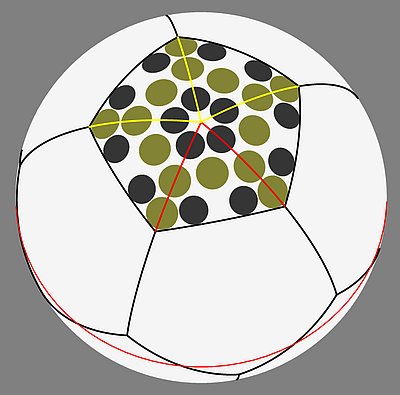
This leaves only half of a quarter of each hemisphere to be defined. For an octahedral golf ball like the
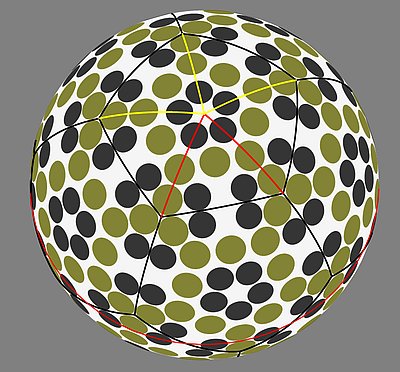
OH 410 TopFlite pattern, only 33 dimples need to be placed (middle image). This means only 8%
of the dimples need to be placed.
Octahedral layout
Half of one section defined
The whole pattern
Basic triangle design
Completed pentagon
Completed pattern
Golf ball seams
Golf ball covers are manufactured using two hemispherical molds. This means there is a seam where the two hemispheres meet, also called the equator. On older golf balls, the seam was clearly visible as a dimpleless band around the ball, often showing the line where the two halves met. Such an area without dimples obivously disrupts the symmetry of the dimple pattern. One can imagine that the golf ball flight is influenced by the ball's initial orientation on the tee. Such asymmetry is undesirable, and the USGA states that unsymmetrically flying balls are not to be used in their tournaments. That being said, proficient golfers were known to take advantage of this behavior. They knew that placing the seam upright produced a slightly higher flight, and placing it horizontally brought the ball flight down a bit.
Over the years, manufacturers have gotten better at 'closing the gap': seams became increasingly smaller. On modern high-end balls the seam is hardly visible at all. On cheaper balls they are still visible though.
For anyone trying to figure out the dimple pattern, the seam is a valuable starting point. Read more on determining dimple patterns on this page.